Address
304 North Cardinal St.
Dorchester Center, MA 02124
Work Hours
Monday to Friday: 7AM - 7PM
Weekend: 10AM - 5PM

Address
304 North Cardinal St.
Dorchester Center, MA 02124
Work Hours
Monday to Friday: 7AM - 7PM
Weekend: 10AM - 5PM
Explore competitive electricity and natural gas supply options for your business. In eligible markets, BusinessRamp connects you with knowledgeable specialists who can help compare available suppliers, review contract terms, and simplify energy purchasing—so you can make informed decisions about your business’s energy costs.

Comparing business energy suppliers can be confusing, especially when rates, contract terms, and availability vary by location. BusinessRamp helps eligible businesses explore competitive electricity and natural gas options, understand their choices, and connect with specialists who can guide them through the purchasing process.
Explore available electricity and natural gas suppliers in eligible markets, with guidance to evaluate rates, plans, and contract terms.
Compare fixed and variable pricing structures, contract lengths, and renewal provisions to find an energy plan that fits your business.
Evaluate competitive supply offers against your current arrangements and identify potential opportunities for greater cost predictability or savings.
Get help navigating supplier choices, pricing structures, and enrollment requirements without having to research every option yourself.
In many parts of the United States, businesses purchase electricity and natural gas from their local utility, with rates and service governed by state regulators. Customers generally cannot choose a competing energy supplier.
In other states, energy markets have been deregulated, allowing eligible businesses to choose among competing electricity or natural gas suppliers. This is often called energy choice or retail energy competition. For additional background on competitive electricity markets, see the U.S. Energy Information Administration’s Electricity Explained.
Importantly, deregulation doesn’t mean your local utility disappears. The utility typically continues to operate the infrastructure that delivers energy to your business, while a competitive supplier may provide the electricity or natural gas you purchase.
For businesses in eligible markets, this creates an opportunity to compare suppliers, pricing structures, and contract terms rather than simply accepting the default supply arrangement.
| Pricing Factor | What It Means |
|---|---|
| Energy Supply Rate | The price charged for electricity or natural gas consumed, often measured per kWh or therm. |
| Delivery Charges | Charges associated with transporting energy through the local utility’s infrastructure. |
| Fixed-Rate Plans | Contracts with a predetermined supply rate for a specified period, offering greater price predictability. |
| Variable-Rate Plans | Supply rates that can change based on market conditions or contract terms. |
| Contract Length | The period covered by an energy supply agreement, including renewal and cancellation provisions. |
| Usage & Demand | How much energy your business consumes—and, for some electricity customers, how much power it requires during peak periods. |
Does switching suppliers guarantee savings? No. Competitive energy markets give businesses more choices, but the lowest advertised rate isn’t necessarily the best overall deal. Contract length, usage patterns, market conditions, fees, and renewal provisions can all affect your total energy costs.
BusinessRamp helps eligible businesses explore available options and connect with specialists who can explain the trade-offs before making a purchasing decision.
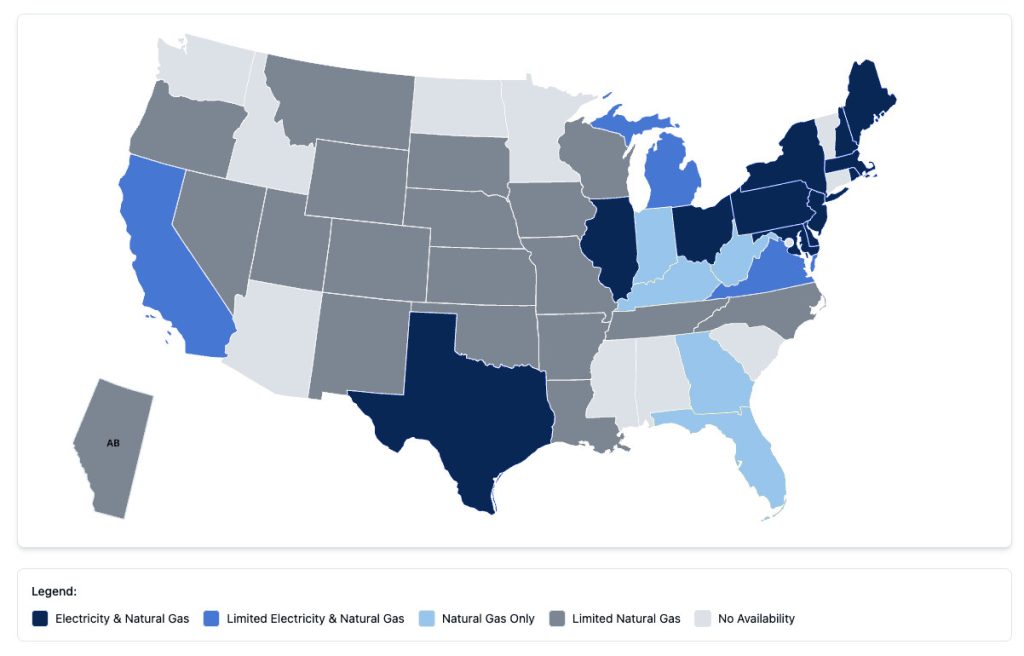
Electricity and natural gas deregulation varies across the United States. Some states allow businesses to choose competitive suppliers for both services, while others offer limited choice or permit competition only for natural gas.
The map below illustrates these differences. Availability may also depend on your utility territory, business type, and energy usage.
Important: A state offering energy choice does not necessarily mean every supplier or plan is available through BusinessRamp.
Business energy needs vary by location, usage, and industry. In competitive markets, eligible businesses may be able to choose their energy supplier and select a pricing structure that better matches their budget and operating requirements. Understanding the available options is the first step toward making an informed decision.
In states with retail electricity choice, eligible businesses can purchase electricity from a competitive supplier rather than relying exclusively on the local utility’s default supply arrangement. The local utility generally continues delivering electricity, maintaining power lines, and responding to outages.
Competitive suppliers may offer different rates, contract lengths, and pricing structures. Businesses can compare these options based on their electricity consumption, operating hours, and tolerance for price fluctuations.
Common Options: Fixed-rate contracts, variable-rate contracts, and customized commercial electricity supply agreements.
In states that permit natural gas supplier choice, eligible businesses may be able to purchase natural gas from a competitive supplier while continuing to receive delivery service through their local utility.
Natural gas suppliers may offer different pricing structures, contract lengths, and purchasing arrangements. Businesses that use natural gas for heating, manufacturing, food preparation, or other operations can compare available options based on their consumption patterns and budget priorities.
Common Options: Fixed-rate natural gas contracts, variable or market-indexed pricing, and customized commercial supply agreements.
One of the most important decisions when choosing a business energy supplier is how your supply rate will be determined.
Fixed-rate contracts establish a predetermined energy supply rate for a specified period, often 12, 24, or 36 months. They can provide greater budget predictability and protection against rising market prices, although businesses may miss out on savings if market prices decline.
Variable-rate contracts allow the supply rate to change over time, sometimes based on wholesale energy prices or other market factors. These arrangements may offer flexibility or opportunities to benefit from falling prices, but they can also expose businesses to unexpected cost increases.
What to Consider: Your business’s energy usage, budget predictability, contract duration, early termination provisions, and tolerance for market fluctuations.
Your business energy bill typically includes more than just the cost of electricity or natural gas consumed. Understanding the different charges can help you compare supplier offers and identify which costs may be affected by switching providers.
Energy Supply Charges: The cost of the electricity or natural gas your business purchases. In deregulated markets, this is generally the portion you can shop among competitive suppliers.
Delivery and Distribution Charges: Fees associated with transporting energy through the local utility’s infrastructure. These charges generally remain regulated and continue to apply regardless of your chosen supplier.
Demand Charges: Some commercial electricity customers pay additional charges based on their highest level of power demand during a billing period, rather than simply their total electricity consumption.
Taxes and Other Fees: Bills may also include applicable taxes, regulatory charges, and other fees that vary by location and utility.
What to Consider: When comparing energy suppliers, evaluate the total estimated bill, not just the advertised supply rate. A lower supply rate doesn’t necessarily translate into an equally large reduction in your overall energy costs. Energy is just one component of your business’s operating expenses. For a broader look at identifying unnecessary spending and evaluating recurring services, see our guide to reviewing your small business technology costs.
When comparing business energy suppliers, the contract terms can be just as important as the advertised rate. Understanding your obligations before signing can help prevent unexpected costs and complications later.
Contract Length: Commercial energy agreements commonly run for 12, 24, or 36 months, although shorter and longer terms may be available. Longer agreements can provide price predictability but may reduce flexibility.
Early Termination Fees: Some suppliers charge fees if you cancel your agreement before its expiration date. Review these provisions carefully, particularly if your business may relocate, close, or change its energy requirements.
Automatic Renewals: Certain contracts automatically renew unless you provide notice within a specified period. Missing that deadline could result in a new contract or a different pricing arrangement.
Renewal Pricing: Your rate may change when your initial contract expires. Reviewing competitive offers before renewal can help you evaluate whether your existing supplier remains a good fit.
What to Consider: Compare the full agreement—including pricing, contract length, cancellation provisions, and renewal terms—rather than choosing a supplier based solely on its initial rate.
Businesses operating multiple offices, retail stores, restaurants, warehouses, or other facilities may face additional complexity when managing energy purchasing. Different locations can have different utilities, rates, contract expiration dates, and supplier options.
Consolidated Purchasing: Where available, businesses may be able to negotiate energy supply arrangements covering multiple locations, potentially improving purchasing efficiency and simplifying contract management.
Location-Specific Availability: Energy deregulation rules vary by state and utility territory. A supplier serving one business location may not be available at another.
Usage Analysis: Comparing energy consumption across locations can help identify purchasing opportunities and determine which facilities may benefit from different contract structures.
Coordinated Renewals: Aligning contract expiration dates where practical can make it easier to evaluate supplier options and manage future energy purchasing decisions.
What to Consider: Businesses with multiple locations should evaluate energy purchasing both at the individual facility level and across their broader operations. A coordinated approach can reduce administrative complexity while accounting for differences in local energy markets.
Business energy needs vary based on industry, facility size, operating hours, and consumption patterns. A small office may prioritize predictable monthly expenses, while a manufacturer or multi-location retailer may benefit from more customized purchasing arrangements. In deregulated markets, understanding your energy usage can help you compare available supplier options.
| Business Type | Energy Priorities | Typical Considerations |
|---|---|---|
| Home-Based Business (1–3 users) | Predictable costs, simple billing | Residential vs. commercial eligibility, usage patterns |
| Small Office (4–10 users) | Budget stability, straightforward contracts | Electricity consumption, fixed-rate options, contract terms |
| Retail & Restaurants | Managing operating expenses | HVAC, refrigeration, lighting, extended operating hours |
| Warehouses & Manufacturing | High-volume energy purchasing | Demand charges, peak usage, customized supply contracts |
| Multi-Location Businesses | Coordinated purchasing, contract management | Different utility territories, supplier availability, renewal dates |
Beyond Business Size: Your industry, location, operating schedule, and energy consumption often matter more than employee count when evaluating business energy suppliers. Reviewing recent utility bills can help specialists understand your usage patterns and identify available purchasing options.
In competitive energy markets, BusinessRamp can help connect your business with knowledgeable specialists to explore electricity and natural gas supply options suited to your circumstances.
Energy deregulation allows eligible businesses in certain states to choose their electricity or natural gas supplier rather than purchasing supply exclusively through their local utility. Competitive suppliers may offer different rates, contract lengths, and pricing structures. Your local utility generally continues delivering energy and maintaining the infrastructure. Availability varies by state, utility territory, and customer type.
That depends on your location and utility service territory. Some states permit competitive supplier choice for electricity and natural gas, while others allow only one or offer limited eligibility. Even within deregulated states, supplier availability may vary by business type and energy consumption. BusinessRamp can help connect eligible businesses with specialists to explore available options.
Switching suppliers may create opportunities to reduce energy supply costs, but savings aren’t guaranteed. Your total bill includes supply charges, delivery charges, and potentially demand charges, taxes, and other fees. Comparing suppliers requires evaluating the complete pricing structure, contract terms, and your business’s consumption patterns—not just the advertised energy rate.
Fixed-rate plans establish a predetermined supply rate for a specified contract period, helping businesses manage price uncertainty. Variable-rate plans allow supply prices to change based on market conditions or contractual pricing formulas. Fixed rates provide greater predictability, while variable rates may offer flexibility or potential benefits when market prices decline. The right choice depends on your business’s priorities and risk tolerance.
Generally, no. In deregulated markets, switching competitive suppliers typically changes who provides your energy supply, not the utility infrastructure delivering it. Your local utility generally remains responsible for maintaining power lines or gas distribution systems and responding to service interruptions. Enrollment procedures and switching timelines vary by market and provider.
BusinessRamp helps eligible businesses explore competitive electricity and natural gas supply options through its technology marketplace partnership. Depending on your location and available providers, specialists can help you understand pricing structures, compare contract terms, and evaluate potential suppliers. The goal is to simplify the purchasing process and help you make an informed energy decision.
Explore competitive electricity and natural gas supply options with expert guidance. Compare available suppliers, understand contract terms, and make more informed energy purchasing decisions for your business.